Table of Contents
- 1. Which Meal Subscription Niche & Market Fit Should You Target First?
- 2. How Do You Set Up Kitchen Licensing Without Overspending on CapEx?
- 3. Why Must You Lock Menus Around Daily Cutoff Timers and Two-Slot Delivery?
- 4. How Do Delivery Geofencing & Cold-Chain Routes Protect Unit Economics?
- 5. How Should You Launch Your Tech Stack & Acquire Your First 100 Subscribers?
Launching a high-margin meal prep, corporate diet box, or recurring tiffin delivery company requires far more than good recipes. This step-by-step playbook—authored by the culinary and software team behind NutriFlow, standalone white-label meal subscription software—walks through licensing, kitchen setup, geofenced delivery routes, and digital infrastructure.
Successful food subscription startups validate local demand inside one tightly geofenced delivery corridor first, lock food COGS under 28% with 3-to-4 week rotating menus, enforce daily kitchen cutoffs, and operate on self-hosted subscription software without losing 25%–35% per meal to food aggregator apps.
1. Which Meal Subscription Niche & Market Fit Should You Target First?
Direct Answer: Pick one clear subscriber persona during your first 90 days rather than trying to feed everyone. High-performing launch niches include gym hypertrophy and fat-loss macro packs, clinical dietitian weight-management plans, busy-professional weekly keto boxes, GCC bilingual family wellness programs, or structured regional tiffin subscriptions for corporate clusters.
Narrow positioning simplifies ingredient purchasing, accelerates word-of-mouth referrals inside gyms or office buildings, and boosts organic conversion rates on your onboarding landing pages.
| Business Segment | Ideal Menu & Plan Cycle | Key Software Driver |
|---|---|---|
| Cloud Kitchen & Macro Meal Prep | 5–6 days/week, lunch + dinner swaps, extra-protein upsells | Batch prep sheets, FIFO inventory, AM/PM courier splits |
| Gyms & Transformation Studios | Challenge sprints (4/8/12 weeks) + front-desk fridge pickups | Biometric BMR/TDEE intake, coach coupon attribution, mobile push |
| Clinical Dietitians & Wellness Brands | Calorie-prescribed medical / dairy-free / low-glycemic cycles | Strict 14-allergen lockouts, Claude AI intake, plate compliance scans |
| Regional Tiffin & Corporate Lunch Ops | Recurring weekly/monthly homestyle & office cluster routes | PIN/ZIP geofencing, vacation skip days, driver COD cash reconciliation |
2. How Do You Set Up Kitchen Licensing Without Overspending on CapEx?
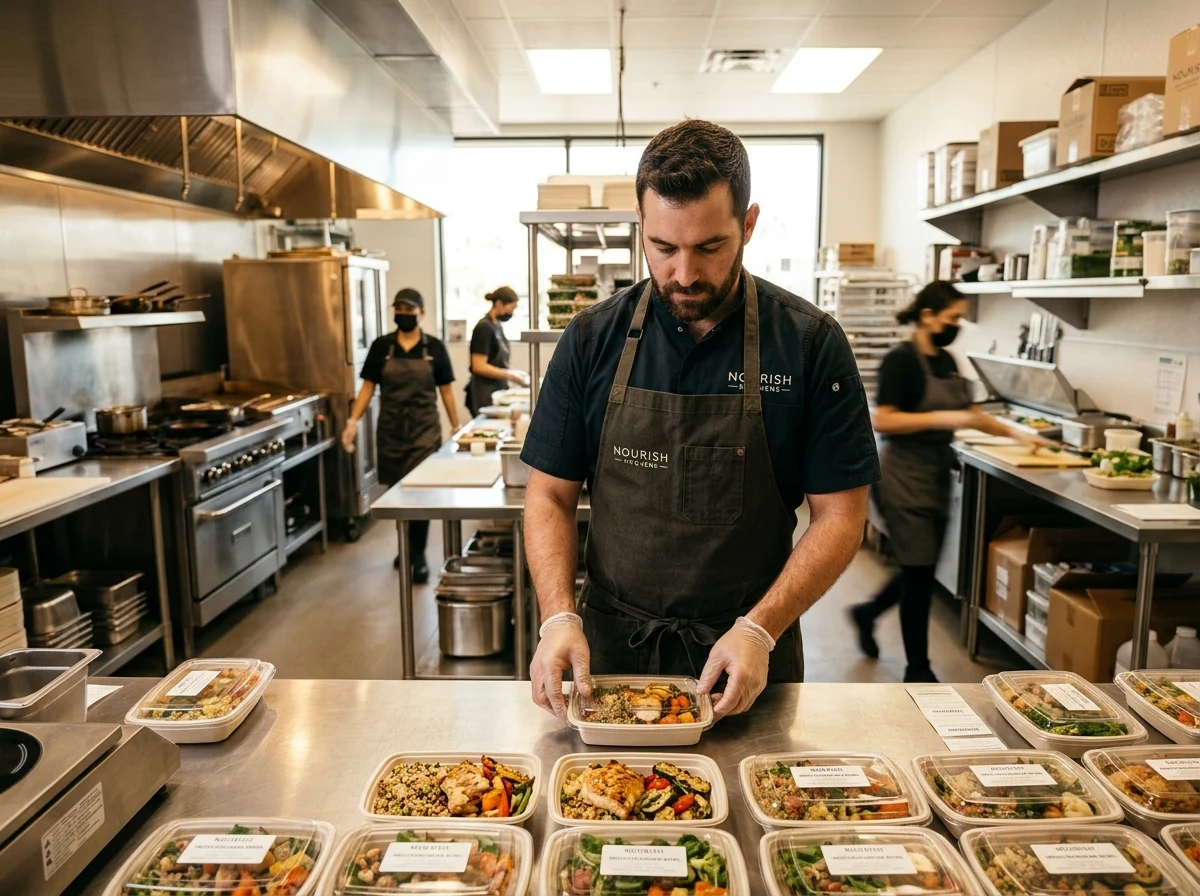
Direct Answer: Avoid signing an expensive multi-year retail lease before testing cohort retention. Most founders start profitably either inside an existing restaurant kitchen during off-peak hours, via shared commercial commissary rentals, or by partnering with a licensed contract kitchen while keeping all branding, subscriber billing, and digital prep manifests under your control.
- Verify Local Food Authority Permits: Register food-handler certifications, commercial cold-chain storage inspections, and regional allergen labeling standards before shipping Box #1.
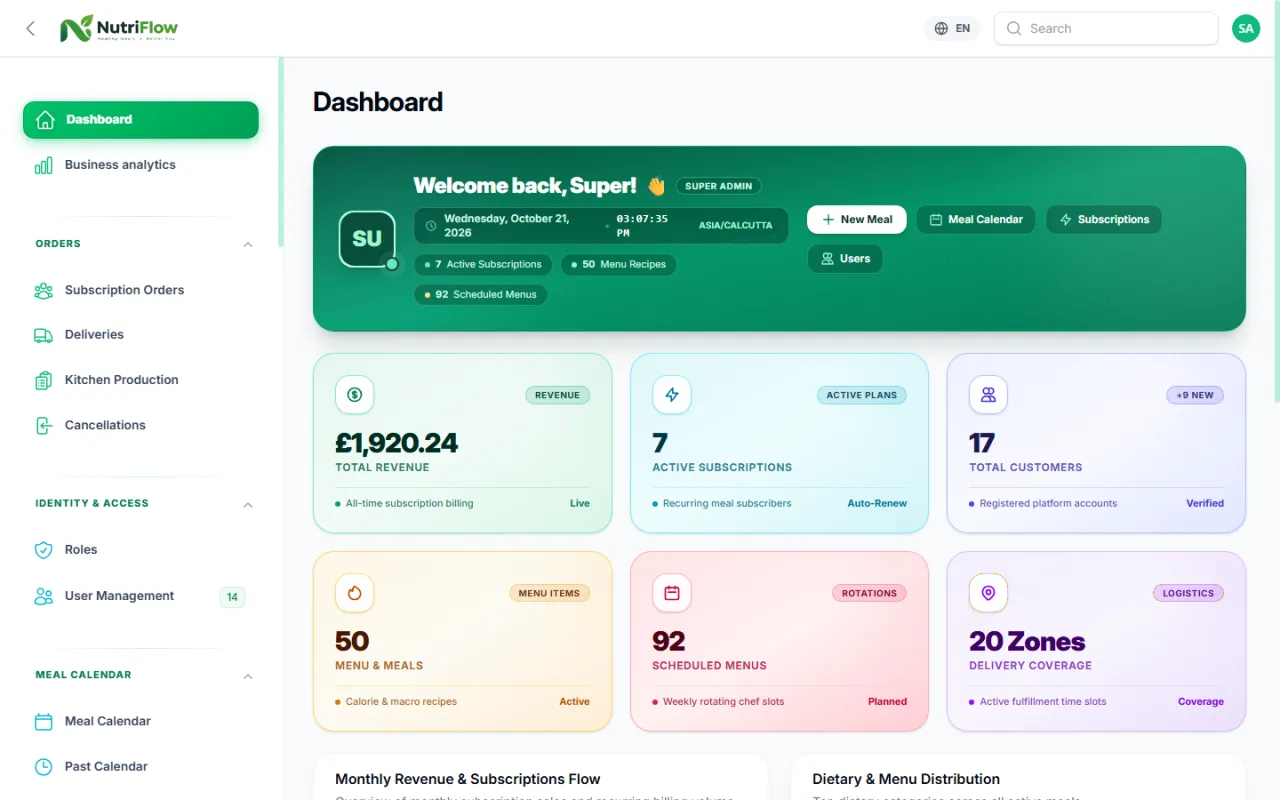
- Leverage Dual Admin/Kitchen Consoles: Using cloud kitchen meal prep software, partner kitchens log solely into restricted Filament prep dashboards to view consolidated dish counts and allergen tags without accessing subscriber billing or margins.
- Enforce Sub-Ingredient Allergen Discipline: Tag every raw spice blend, marinade, and oil against all 14 major allergens at inventory setup so composite sauces inherit accurate safety lockouts automatically (explore our allergen safety engine).
3. Why Must You Lock Menus Around Daily Cutoff Timers and Two-Slot Delivery?
Direct Answer: On-demand food delivery suffers thin margins because kitchens over-prep perishable proteins to guess unpredictable demand. Scheduled meal subscriptions turn chaos into deterministic manufacturing by locking subscriber swaps 24–48 hours ahead of cooking and bundling deliveries into strict AM and PM drop windows per zone.
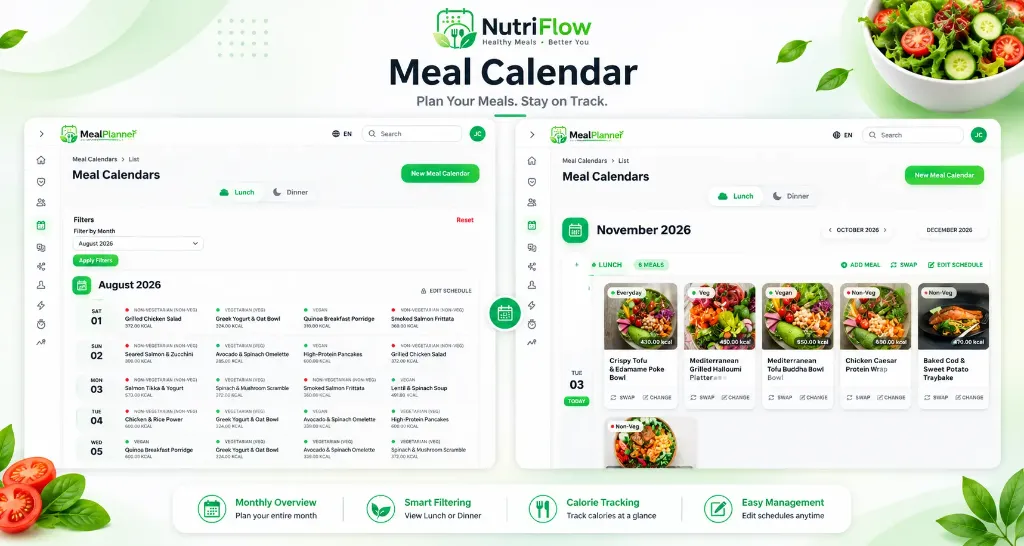
- Step 1 — Configure cutoff clocks cleanly: Lock upcoming menu changes automatically with Laravel queue workers while firing automated push alerts 2 hours before lock-in.
- Step 2 — Aggregate raw batch cooking: Print unified protein/grain/vegetable batch sheets—45 portions of Lemon Herb Salmon cook in one oven cycle instead of 45 piecemeal pans.
- Step 3 — Handle non-choosers automatically: Auto-assign balanced fallback dishes aligned with each member's macro targets and saved allergies so kitchen production never stalls.
Building a Similar Meal Subscription Platform?
Get complete, unencrypted Flutter mobile apps, Laravel 12 multi-kitchen API, and Next.js 16 storefront code with zero ongoing revenue commissions.
Inquire on WhatsApp4. How Do Delivery Geofencing & Cold-Chain Routes Protect Unit Economics?
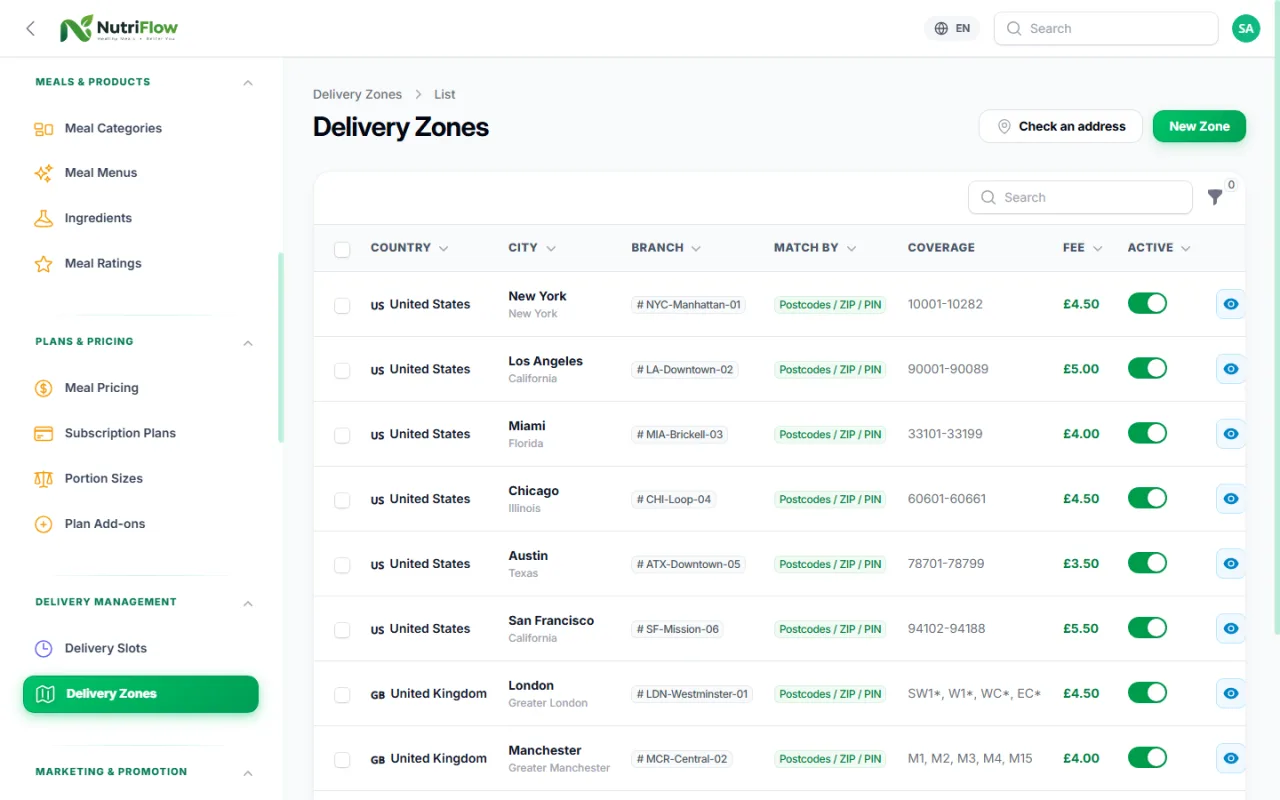
Direct Answer: High-density drop zones separate profitable subscription brands from failing courier operations. By enforcing PostgreSQL + PostGIS polygons, kilometer radial rings, or postal allowlists at checkout—before taking a customer's card—you eliminate unprofitable far-flung suburbs and keep per-drop logistics costs predictable across morning and evening shifts.
See our deep dive on PostGIS geofencing and two-slot fleet manifests for exact configuration workflows supporting GeoJSON neighborhood boundaries, tiered zone fees, and driver Cash on Delivery (COD) settlements.
5. How Should You Launch Your Tech Stack & Acquire Your First 100 Subscribers?
Direct Answer: Skip generic food marketplaces that tax 30% per box and hide customer email/push data. Launch directly under your own brand with a fast web storefront, native iOS/Android apps featuring one-tap Apple/Google Pay, and bilingual EN/AR onboarding, then drive early density through trainer partnerships, office tastings, and corporate group discounts.
- Pick Your Ownership Path: Weigh six-figure agency contracts against monthly SaaS tolls vs owning turnkey white-label meal subscription software.
- Deploy & Rebrand Fast: Run the 3-step browser Web Installer (
/install), apply your Tailwind colors/logo, seed 2–4 weeks of high-margin recipes, and verify PostGIS zones. - Activate Early Acquisition Loops: Offer local gyms and nutrition clinics unique Filament promo codes and cooler front-desk drop-offs to lower early CAC rapidly.
- Optimize 60-Day Retention: Track skipped days, dish ratings, and cutoff swap participation inside Filament executive reports; enable multimodal photo plate scanning to keep subscribers engaged between orders.
Frequently Asked Questions

Richie
Head of Culinary Logistics & Dietary SafetyRichie leads culinary logistics, nutritional safety, and commercial kitchen workflows at NutriFlow. With deep expertise across high-volume batch prep, dietitian-led clinical programs, and strict 14 major allergen management, Richie helps food entrepreneurs scale subscription kitchens safely.